
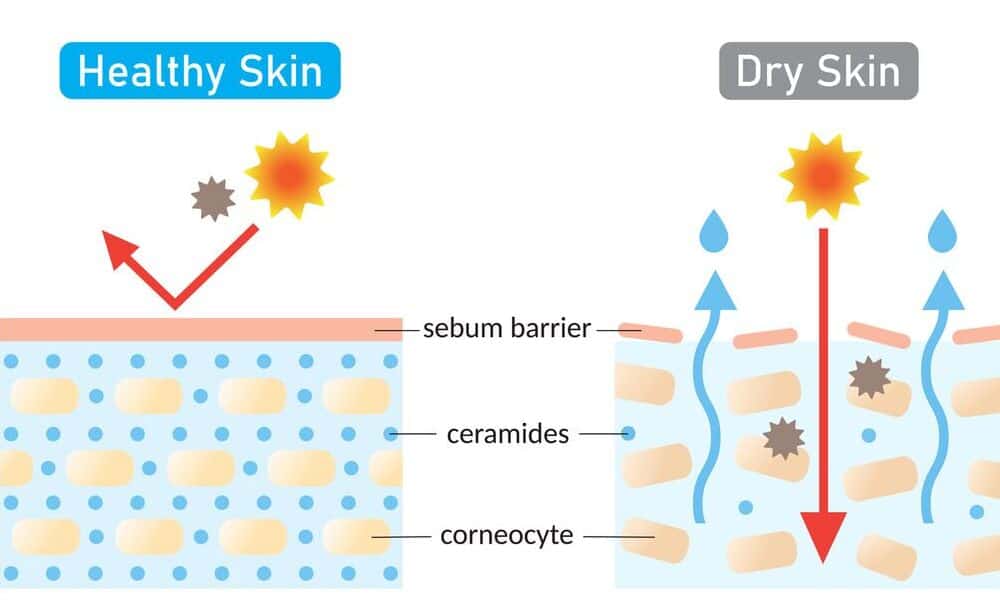
Transepidermal Water Loss, or TEWL for short. is a natural process that happens all the time. Basically, water from the deeper layers of your skin slowly makes its way up to the outer layer, which is called the epidermis, and then it just evaporates into the air. it happens constantly, even if your skin is perfectly healthy.
But, if water evaporates faster than your skin can replenish it, that spells trouble for your skin’s moisture levels. Knowing what speeds up this TEWL helps you to actually take care of your skin.
- Compromised Skin Barrier: This is the main reason behind it. If your skin’s natural “wall”, which is the skin barrier, gets damaged, it’s just not gonna hold onto moisture.
- Environmental Conditions: Dry air acts like a sponge, soaking up moisture from our skin. That’s why we feel extra dry in places with low humidity or when we’re indoors in heated or air-conditioned spaces. And too much sun exposure, especially if you get burned, can harm your skin cells and lipids, making it harder for your skin to protect itself.
- Aging: As we age, our skin starts to get a bit lazy. Over time, our skin naturally produces fewer oils, which are basically its built-in moisturizers. And it gets a little less efficient at patching itself up. This thinning and weakening of our skin’s barrier can really ramp up TEWL. Your skin just gets leakier with age.
- Skin Conditions: if you’ve ever dealt with inflammatory skin issues like eczema, psoriasis, or rosacea, you probably know how frustrating they can be. You’re pretty much dealing with a skin barrier that’s already doing a bad job. When that happens, you end up with something called elevated TEWL, basically, your skin loses moisture way too easily.
- Harsh Skincare Practices: Using harsh cleansers or washing too frequently removes your skin’s natural oils. Aggressive physical or chemical exfoliation can physically damage the stratum corneum. You’re essentially punching holes in your skin barrier wall, making it a sieve for moisture. So, be gentle.
- Lifestyle Factors: Things like smoking, stress, prolonged hot showers, not getting enough sleep, and even being a bit dehydrated can really mess with your skin’s hydration. Now, these things don’t directly cause transepidermal water loss (TEWL), but they can definitely make it worse.
- Medications and Medical Conditions: Some medications can mess with your skin’s hydration, making it harder to hold onto water. And certain underlying health issues can also just inherently weaken that skin barrier, making it easier for moisture to leave. It’s like your body has other priorities, and maintaining skin hydration isn’t always high on the list.
The goal isn’t to shut down Transepidermal Water Loss entirely. That’s like trying to stop breathing. Instead, you just need to figure out when it’s getting excessive.
And how do you know if that’s happening? It’ll throw up some signals, the signs of elevated TEWL, and that’s your cue that it’s struggling.
Signs of Elevated TEWL on the Skin
Elevated TEWL isn’t going to show up on scans, but your skin’s usually pretty good at letting you know it’s struggling. We often misunderstand these signs, just calling it “dry skin,” but it generally points to an underlying moisture imbalance.
- Persistent dryness and tightness, especially after you’ve just cleansed your skin or when the air is dry.
- Flaky patches, even if you’re applying moisturizer regularly.
- Fine lines that seem more noticeable, especially around the eyes or mouth.
- A dull, tired complexion, with a bit less brightness than usual.
- Redness and stinging, especially when using products that have worked well for you in the past.
You can use all the hydrating products you want, but if your skin’s little “wall” is busted, it’s like pouring water into a colander. It just can’t hold onto that moisture. So, your skin just stays in this endless game of catch-up.
How to Manage High Transepidermal Water Loss
When your skin’s actively compromised, barrier repair is the absolute priority. The whole goal isn’t to fight Transepidermal Water Loss directly, but to give your skin the support it needs to actually regulate moisture on its own. And that starts with plain old simplicity and consistency.
Simplify Your Routine
- Take a break from using active ingredients, scrubs, exfoliants, or anything that might irritate your skin.
- Keep it simple with your skincare routine. Just grab a gentle, non-foaming cleanser, follow up with a nourishing moisturizer that helps repair your skin barrier, and don’t forget to apply broad-spectrum SPF during the day.
Lock in Moisture at Night
- After you’ve moisturized, go ahead and apply a thin layer with occlusive ingredients like petrolatum, squalane, or even a thick night cream. Just a little bit, and it’ll help seal in all that good hydration overnight.
- You can also use a little face oil after your moisturizer. It’s a good way to maintain that moisture and keep your skin barrier from losing water overnight.
Give Skin Time to Recover
- Keep them short and lukewarm, never blazing hot.
- Take care of your skin when the weather’s getting rough. And steer clear of those cleansers that make your face feel tight afterwards.
- Make sure to give your skin some time to bounce back before you start using exfoliants or any active treatments again.
Once your skin is calmer, more comfortable, and visibly stronger, you can slowly ease back into a fuller routine. Start with barrier-friendly, low-strength options. Don’t rush it, as your skin’s moisture is slowly coming back.
How to Reduce High Transepidermal Water Loss
You’re not going to stop Transepidermal Water Loss, and you probably shouldn’t even try. But what you can do is reduce the excessive water loss, It’s not about being perfect, or achieving some sort of skin nirvana. It’s just about building some good habits.
1. Strengthen Your Skin Barrier Daily
- You want to pick something gentle and non-stripping. Think cream-based or oil-based cleansers, they’re ideal for keeping your skin’s natural oils where they belong.
- Try to keep exfoliating to about once or twice a week, especially if your hydration levels are already low. And if your skin’s feeling tight or a bit sensitive, it might be best to skip it altogether.
- Continuously support your barrier function. Keep using moisturizers rich in ceramides and fatty acids. Simple as that.
2. Lock In Hydration with Smart Layering
- Try applying hydrating ingredients like glycerin or hyaluronic acid right after you wash your face, while your skin is still a bit damp.
- Follow up with a nice, creamy moisturizer or something rich and emollient.
- Seal everything in with an occlusive layer like a balm or oil. Do this especially at night or in dry weather, locking that hydration down.
3. Protect Against Environmental Moisture Loss
- Consider running a humidifier. It can really help add some much-needed moisture to the air and make your surroundings feel way more comfortable.
- Apply some SPF every morning. It’s your best defense against UV rays that can cause all sorts of skin trouble.
- Avoid hot showers and extreme temperatures. And remember, less is more when it comes to washing your skin, over-cleansing can do more harm than good.
4. Support Skin From the Inside Out
- Make sure you’re getting plenty of quality sleep. That’s when your skin does a lot of healing.
- Stay well-hydrated and eat those skin-loving nutrients like omega-3s, antioxidants, and zinc. Fuel your skin from within.
- If you want to help your body heal better, it’s a good idea to stay away from smoking and keep your stress levels in check. Both of these can slow down your recovery and ramp up inflammation.
TEWL isn’t a flaw, it’s just your skin breathing, doing its natural thing. The goal isn’t to stop it entirely, but to understand when it’s happening excessively. Then, you gently support your skin in retaining the hydration it truly needs.
By tuning into your skin’s signals and consistently making barrier-friendly choices, you won’t need some overly complicated routine. Instead, you’ll build skin that’s more resilient, more consistent, and ultimately, more in tune with you.


